Showing posts with label Victorian. Show all posts

Sunday, August 16, 2015

Fee Gee Fiji Mermaid Prop, a Classic Gaff of the Victorian Era


The other day I was doing a little reading online about classic sideshow exhibits and gaffs, the most celebrated of the genre is the Fee Gee Mermaid of P. T. Barnum+ fame from the 1840s.  Over the years the Fiji Mermaid idea resurfaced in traveling museums, curio shops, carnival sideshows, roadside attractions, and at auctions.   Most of the gaffs were composed of fish parts and other taxidermy items cobbled together to make a mermaid for the rubes to gawk for a dime a shot.  I won’t go into the history of the Fee Gee Mermaid as the links in this post pretty much walk you through the background of these interesting biological fantasies.


So anyway, I stumbled upon a really interesting site called the Taxidermy Emporium, which is based in the UK.  It has some of the most interesting dead things I have seen for sale outside of a Victorian curiosity shop.  The photos of the objects in question, in this case was a Fiji Mermaid gaff, which was worthy of a blog post.
A Fiji Mermaid gaff at Taxidermy Emporium   Ref PI 1040  Sold

Another Fiji mermaid from the same source     Ref PI 902  Sold

Sea Pixie from Taxidermy Emporium     Ref PI 912

Before you get too excited about purchasing items from the Taxidermy Emporium my American readers, many of the offerings at this site are absolutely illegal to import into the USA as most of them are of endangered species.  Well possibly excluding the Fee Gee Mermaid gaffs, but there is no telling of what material those items are made.  There are stringent import laws about the importation of objects made from endangered species, far more than the expected aquatic mammal and elephant ivory items, we generally hear about in news articles.
This classic gaff and variations has been posted a number of times by well-known prop expert on his site Propnomicon, see below.  Propnomicon has covered the prop scene for a number of years now and features a number of tutorials on how to make props.  The fan community owes a big debt of gratitude to Propnomicon for his daily posts about props and prop making over the years.
The only other gaff that tickles me more than the Fee Gee Mermaid is the classic roadside attraction, The Thing, but that’s another story*.  I hope this post has been of interest and will stimulate the reader into looking more deeply into historical gaffs and props of the 19th century. 

                                    CoastConFan

Not all of the items at the Taxidermy Emporium are for everybody as seen below.
These are called, “Well preserved British Bulldog puppies – Natural death”     Ref – PI 984   sold

    *Well also jackalopes too.  The history of the true origin of the jackalope.

    +P. T. Barnum actually didn’t say, ‘There’s a sucker bornevery minute” it has been attributed to David Hanum a competitor in the trade, who was commenting on Barnum making his own copy of the Cardiff Giant – a fake of a fake.  The real joke is that Barnum’s fake made more money than the original fake.  Now that’s ballyhoo.  


Links of Interest
A number of Propnomicon Fee Gee Mermaid posts:


A large collection of Fiji Mermaid images and memorabilia, well worth the view   http://www.sideshowworld.com/81-SSPAlbumcover/Feejee/fejee.html

More background on Mermaids  http://canofmystery.blogspot.com/2013/10/legend-of-fiji-mermaid.html

Monkey headed Fiji Mermaid gaff


Thursday, November 28, 2013

Christmas 2013 Books Reading List – Ten Books (plus a few more)


Last year I put together a list of 10 Christmas books for 2012 so I decided to put out a new list of 10 plus for 2013.  I recommend all of these books to the discerning reader who wants to be a bit less mainstream or looking for a challenging read. 

This year’s list seems to have a good bit of non-fiction but I have no apologies.  I have read all of these books (some decades ago mind you) and they were good enough to stick with me over the years to recommend this year.  These are no particular order of preference and my plan is to present challenging non-mainstream books or works no longer commonly read.  There is stuff there for everybody:  SF fans, steampunks, fantasy, biography, history, and surrealism.  2014 looks to be a wild year, so stock up with decent books in case of a zombie apocalypse. 

Fool On the Hill by Matt Ruff (1988) A book I read years ago when it was new, but I think that the average reader is savvy enough to catch the (what was then) obscure and geeky literary references.  It’s a little bit dated but still a fun read.

The English Patient (1992) by Michael Ondaatje.  Forget the movie, read the book!  The portion based on North African archeology of early people is partly based on the fascinating true story of László Ede Almásy.  For background, I had previously read Ralph Bagnold’s Libyan Sands, Journeys in a Dead World (1935) and Johann Ludwig Burchardt’s Travels in Arabia (1839) which gave The English Patient a lot more definition.   

Lola Montez, A Life by Bruce Seymour (1996) an absolutely perfectly and meticulously researched biography from original sources of one of the Victorian Era’s most outrageous rogue women.  Fans of Victorian history and Steampunks need to read this book!

Love In the Time of Cholera by Gabriel Garcia Marquez (1985), and The General in his Labyrinth (1989).  Marquez one of the masters of South American magical realism (but with more violence than Borges).  Try reading Marquez’s Love in the Time of Cholera and comparing it to Joseph Conrad’s Nostromo (1904) for a bit of fun.

Teach Us to Outgrow Our Madness by (1969) and The Day He Himself Shall Wipe My Tears Away (1972) Kenzaburo Oe with disturbing stories from modern Japan.  OK, so that is two books – I cheat at lists, so what.

Private Perry and Mister Poe (2005) edited by William Hecker.  This is a collection of poems by Edgar Allan Poe which were written while at West Point.  Along with a nice facsimile printing of Poems of Edgar A. Poe (second edition) printed in 1831 and dedicated to the cadets of West Point.  For that matter part of the cost of printing was raised by subscription from those cadets before he departed.  The real meat of the book is an excellent and well researched section on Poe’s short military career often overlooked by biographers.  If you are a Poe fan, you need this book.  I used this book as an important portion for my research in my previous blog entry:   http://coastconfan.blogspot.com/2013/11/edgar-allan-poe-writer-poet-literary.html

Skunk Works by Ben Rich (1994) about the mythic secret Skunk Works by one of the top engineers there.  The Skunk Works in Burbank produced the U-2, SR-71, and the F-117 stealth fighter among others.  It puts a human face on the people who made science fiction into reality. 

Heaven’s Command, an Imperial Progress (1973) by James Morris about the early years of the British Empire and how the Empire became Victorian.  It covers most of the personalities of Empire, although it delves mostly on India and later South Africa, there is a lot information to pursue and follow up.  You steampunks need to read this to get a grip on history 19th century English history.

The Hearing Trumpet by Leonora Carrington (1974) a masterpiece of surrealism and fantasy by a famous surreal artist.  I read this in the middle 70s and has been out of print for years but is back in print again. 

The Ottoman Centuries: The Rise and Fall of the Turkish Empire (1979) by Lord Kinross.  A sprawling view of the Ottoman Empire:  why it worked, why it failed and why it was important to Western history.  Although an older book, it is your one-shop-stop for a definitive read on this juggernaut of history.  You might be surprised by what you find.

Armageddon 2049 A.D. (1928) and Airlords of Han (1929) by Philip Francis Nowland  two novels about Buck Rogers transported to the dim future.  Now wait, this has little to do with the B movies serials and the comic strip characters.  These two novellas often published together as a single book.  It is very advanced for the late 1920s and worth the read when taken in context of the era.

A little lagniappe …      
Also if you are into obscure (in America) Japanese science fiction try out Inter Ice Age 4 (1959) by Kobo Abe – it compares interestingly to Kurt Vonnegut’s Cat’s Cradle (1963).  

Have a happy and safe holiday season.

                  CoastConFan

Monday, November 11, 2013

Edgar Allan Poe: Writer, Poet, Literary Critic, and Soldier


FIRST, A RATHER OVERLENGTHY FORWARD    For this Veteran’s Day I thought I would cover the short career of a veteran that is known to every American although his military career was short and obscure.  I would also like to mention another, more recent veteran, who was also an artillerist. West Point attendee, and connected to writing, specifically about Poe, but I’d like mention that portion at the end of the article.  Let me say am no Poe scholar by any means, but I have cobbled together as many facts as possible from reliable sources about this forgotten period of Edgar Allan Poe.  I am not going to recap Poe’s whole life as there are plenty of sources available.  Frankly, if you are unfamiliar with the basics of Poe’s biography, you are probably reading the wrong blog.

AND NOW ON WITH THE SHOW    In addition to being a writer, well-known poet, literary critic, editor, and early SF writer as well as the creator of the modern detective story, Edgar Allan Poe also had a military career.  His influence on Jules Verne, H. P. Lovecraft, Baudelaire as well as detective writers and poetry in this century and in the previous ones.  His contribution to the literary world is well known, but his military career outside of his dismissal from West Point is obscure and seldom mentioned.  In fact, few people know that he had a promising military career.  The scope of this article is very narrow, following just his military career and its impact on him personally and his subsequent writing career.  There are plenty of Poe biographies good, bad, and fantastically incorrect and I have found the later the biography of Poe, the more scholarship and less folklore was involved.  


Many Victorian biographies completely leave out Poe’s military service outside of references to his abortive West Point career of 1830-1831, but the two years he was an artillerist in the regular Army was an important period of his life and proved to be a turning point.  Had things gone differently, he might have remained in the army become an officer of distinction fighting in the Seminole Wars, the Mexican War and through the American Civil War, probably as a Confederate.   Destiny had a different path for Edgar Allan Poe.

Anyone familiar with the typical Poe biography knows that Poe’s parents were actors and died when he was a child.  But Poe’s grandfather had a profound influence on him even after his grandfather’s death.  David Poe Sr. was a renowned Revolutionary War hero who was a Major involved with logistics and procurement.   For his efforts was made a Brigadier General and very highly regarded.  Edgar Poe seemed destined for a career in the military himself.  As a youth, Poe was the Lieutenant in charge of the honor guard of the Richmond Junior Volunteers for the visit of the Marquis de Lafayette when he visited Richmond in October of 1824.  Young Poe would have been 15 at the time.   Lafayette visited David Poe Senior’s grave on grave in Baltimore and exclaimed, “Ici repose coeur noble!” 

After a disagreement with his foster father, John Allan in March of 1827 about gambling debts incurred while at the University of Virginia, Poe left for Baltimore and enlisted in the regular army there on 26 May 1827 under an assumed name: Edgar Perry.  An image of his original enlistment document is at the end of this post.  Poe was just 18 although he showed his age as 22 on the enlistment.  Along with being strapped for cash, he may have also been disappointed in the publication of his first book Tamerlane and Other Poems in 1827 as well.  The booklet had been published by an obscure printer with no real distribution and no literary reviews, selling for only 12 and ½ cents per copy.  Needless to say, the book did not sell well and only 50 copies were printed.  He would not be able to use writing to pay his debts nor would his foster father help.  The irony is that now this obscure edition sells now for a small fortune with only a handful known.

So then he was enlisted in the 1st ArtilleryRegiment, Battery H and his first duty station was at Fort Independence in Boston Harbor.  He would be there only eight months, but clearly his superiors noted something different in Private Perry and soon appointed a clerk in July 1827, filling out paperwork and tending to the typical day to day paper chores of a military unit. 

The practice of the time was to rotate individual batteries of artillery regiments to different posts around the nation and Battery H was ordered to Fort Moultrie on Sullivan’s Island, South Carolina part of the important coastal fortifications of historic Charlestown harbor on 31 October 1827.

It took time to arrange transportation so the unit did not leave Boston until the 8th of November on the brig Waltham, arriving on 18 November 1827 at Charlestown harbor.  Little did artillery private Perry (Poe) know but that his time on Sullivan’s Island would reap benefits for his writing career later.  His experiences there provided the settings and mood for later writings such as The Gold Bug, The Balloon-Hoax, and The Oblong Box.  Many people don’t realize that Poe might be considered an Antebellum southern writer,  at the time America was just beginning to create its own literature distinctive from English literature. By the way, Baltimore is south of the Mason Dixon Line, along with Washington DC.

The fortifications on Sullivan’s Island included Fort Moultrie, which had a long career as a battleground during the Revolutionary War, the War of 1812, and would again be the focus of combat in the Civil War much later.  In fact the opening shots of the Civil War would be fired from Charlestown harbor defenses on a ship attempting to relieve the consolidated Union garrison on another fort in the harbor, Fort Sumter some of which had been evacuated from Fort Moultrie, but that’s over thirty years in the future.  By the way, the town library on Sullivan’s Island is part of a post-Civil War fortification, Battery Gadsden, a Spanish American War construct, which has Poe section and several streets on Sullivan’s Island are named in honor of Poe.

Poe prospered at Fort Moultrie and rose to the rank of Artificer on 1 May 1828, which doubled his pay from $5 to $10 a month.  Lieutenant Howard who commanded Battery H, wrote that Perry (Poe) was good in habit, “good, and entirely free of drinking,” and the adjutant of Ft Moultrie indicated Perry (Poe) was “highly worthy of confidence.”   No doubt Poe visited Charlestown when on leave and met a number of people.  Being a polished and gentlemanly young man he didn’t find doors closed to him despite being a lowly army sergeant.  No doubt his grandfather’s name opened a few doors as well.

He became friends with a prominent Charlestown resident, War of 1812 veteran, and member of the House of Representatives for South Carolina from 1825 to 1833, Colonel William Drayton and continued the friendship when Drayton moved to Philadelphia in 1833, later president of the 2nd Bank of the United States.  Poe dedicated Tales of the Grotesque and Arabesque to Col Drayton in 1840  

Poe may have also met young Caroline Howard Gilman, who was later a very famous southern writer and poet who lived in Charlestown from 1819 to 1858, along with her husband who was the minister of the Archdale Street Unitarian Church.  Poe certainly would have known here name years later when he was an editor and literary critic.  
 
But all good things come to an end and Battery H received orders to move and they left for Fort Monroe on Old Point Comfort in Virginia overlooking Chesapeake Bay, on the Harriet on 11 December 1828 and landing 15 December.  Poe did well as a regular soldier, he eventually achieved sergeant major effective 1 January 1829, the highest NCO rank possible in only 19 months of service. 

On the home front, Fanny Allan, wife of David Allan Poe’s estranged foster father was very ill and Allan wrote Poe telling him to come to her sickbed, but by the time Poe got leave Mrs. Allan had already died.  Poe arrived the day after her burial and was overcome with grief that he had to be assisted from the grave site. 

Reconciliation with David Allan came soon after and on 15 April of 1829, Poe secured his discharge from the five-year regular army enlistment by paying for a substitute for $75 to finish out his enlistment.  In order to get an appointment, Poe procured letters of recommendation from important citizens, including former governor of Virginia, James Preston who was also familiar with Poe’s poetry.  Poe also got the Speaker of the House of Representatives to write recommendation letters for him.  Poe presented the letters to Secretary of War James H. Eaton in person.

In March of 1830 he received his formal acceptance to attend West Point Military Academy and began attending in June of the same year.  Poe may have thought having some practical years as a soldier would help him as a cadet but the Academy proved to be far different than he had expected.  Many previously enlisted members attending the Academy can attest to this, even at this late date.  Discouraged, Poe regretted his decision to make the military a career and began to look for a way out.

Poe was discharged from West Point, 6 March 1831, but despite his failure, he continued to have visits from his old West Point comrades years later.  A good deal has been written as to why Poe was discharged from West Point, but that is not the focus of this article.  Although I would mention that Poe left with some good feelings from his brother West Pointers.  131 of his brethren paid $1.25 each to subscribe to his newest book of poems and a number remained in contact with him over the years and sometimes visited. 

A number of things have come to light about Poe that is not often mentioned in his biographies.  He was athletic and an excellent swimmer and was good in mathematics, which stood him in good stead as an artilleryman.  He was clearly mechanical and resourceful as he became Battery H’s artificer and has been company clerk.  This is quite a different Poe depicted later by biographers just after his death. 

He was well liked by children, a joker, prankster, and humorist.  He also had visits from his West Point comrades from his military days.  Due to being cut out of David Allen’s will, Poe was left with little resource later in life outside of this ability to write.  Who knows as a military officer with a large inherited fortune, he might have later gone into politics after the military.  But it was not to be.
 
Let me point out that the terms Romantic and Sentimentality had very different nuance and connotations in the 1820s, 1830s, and 1840s than they have today.  Remember it was the period of the Gothic story so Poe’s works would not have been considered morbid or the product of a depressed mind by the standards of the day.  Most importantly, Poe's body of work helped to make the short story a distinct literary form.  Remember that Poe was born before the start Victorian era and died well before its peak.  His belief in unity of idea, specific word use, objective technique in poetry writing and pulled it out of the Georgian era of fancy embellishments and witticisms.  


Personally, Poe could be charismatic and persuasive.  He was certainly perceived as a joker and possibly even a hoaxer, but that is another story.  He developed life-long friendships along with the inevitable enemies endemic of a career of literary criticism.  There is a lot of nonsense written about Poe, some of it just lazy copy work and others are calculated spite.  There is plenty written for an against these views and I leave it to the academics to hash it out, but your best one-stop-shop source of largely unbiased, good quality Poe scholarship is The Poe Society.  

Again, there are a number of Victorian biographies filled with spurious and unsupported allegations   words take out of context purposely.     Some of those are mentioned here:  http://www.eapoe.org/geninfo/poealchl.htm  and http://www.egs.edu/library/edgar-allan-poe/biography/ .

 
AND NOW A LITTLE BACKGROUND AND RAMBLING,    I became interested in running down Poe’s military career decades before the internet, when information had to be dug out of distant and obscure libraries and repositories. Most specifically I had heard Poe had been in some sort of Richmond artillery militia group in the 1820s but had little to go on with traditional biographies.  A little while back while doing some research on early 19th century militias, I tuned up (for me) the holy grail – Poe’s original enlistment that some good person had put on the internet.  From there it became a chase thorough sources and internet sites finding a bread crumb trail of information (and misinformation) about Poe’s elusive military career before West Point.  I’m sorry that I didn’t start looking much sooner as many of my questions were answered and gaps filled in of Poe’s forgotten life.

This article is a sort of Frankenstein of a number of sources that I have tried to cross check for accuracy by using original documents whenever possible.  I have found the best scholarship seems to be set as remotely far as possible from period articles or those written in the first decades after Poe’s death.  A spate of fresh and new scholarship has been yielding up a lot of information in the past several decades. 

One important source I have used was Major William F Hecker’s, Mister Poe:  The West Point Poems.  As part of this Veteran’s Day post, I would like to mention Maj Hecker for his service and accomplishments as a Poe fan.  Sadly just a year after editing and publishing this work he was killed in Iraq on 5 Jan 2006 while serving his country.  He probably has more in common with Poe/Perry than a good number of other Poe researchers.  He, like Poe, was an artillerist, attended West Point, a man of letters, and had his career ended early.  I’d like to dedicate this memorial in electrons and photons to both Poe and Maj Hecker who are two American veterans here on this Memorial Day of 2013.

                                                                                        CoastConFan
LINKS ABOUT MAJ HECKER


LINKS ABOUT POE
A site about Poe bios


The Defense of Charlestown Harbor (Civil War) book:  https://archive.org/details/defensecharlest01johngoog

In conclusion I would like to point out that a good many of Edgar Allan Poe’s works are available on line for free download, in a number of electronic formats from Project Gutenberg, this making Poe’s works accessible to everybody:  http://www.gutenberg.org/ebooks/author/481 .

-------------


Update Aug 2014:  I recently turned up a couple of articles about Poe’s artillery career posted on the web:

Author, Poet Edgar Allan Poe Had Little-Known Career as Artillerist, The Artilleryman Magazine, Winter 2003, Vol 25, No 1  http://artillerymanmagazine.com/Archives/2003/poe_w03.html

Seeds of a Soldier, Army Space Journal, Fall 2003, PDF  www.dtic.mil/cgi-bin/GetTRDoc?AD=ADA525759

Tuesday, May 28, 2013

Victorian Steampunk Wimshurst Electrostatic Generator by Casavitus


Or, “It’s alive, ALIVE!” 

Electricity:  philosophers debated it, alchemists expounded upon it, enlightenment experimenters played with it, Victorian scientists tamed it.  From ancient Greeks, to Mary Shelly’s Frankenstein, electricity was one step away from magic and godhood with Zeus hurling thunderbolts at poor mortals.  Amazingly over the  centuries, nobody made the connection between static electricity, which known by the ancients for its attracting power with amber, to static shock, or lightening, to machines to amuse at parties or medical quack cures. 

Early experiments eventually found that electricity was natural, dangerous, and somehow interwoven with life itself.  Eventually, electro-chemical electricity (wet cell batteries), and static electricity generators became dwarfed with huge power plants, first run by steam engine, then by falling water, filling energy.  Now electricity is taken for granted, but there was a time when it was rare and magical and that time was only 150 years ago.

Casavitus Design gives us this magnificent recreation of a static electric generator in a beautiful 19th century mode of design.  Fully operational and aesthetically mid-Victorian, this machine generates a powerful electric spark that jumps between two metal rods in a dazzling display of simple electric power.  Don’t be deceived by the size of the portable design, the twin Leyden jars can store a very powerful jolt and cannot be treated as a toy, beware! 

Casavitus has kindly allowed me to showcase this artistic work here on my blog.  You will find photos of the finished work here as well as the materials he used to scratch-build the machine.  Additionally he provided a short YouTube video.  His text is a follows:  

 
Dear Ladies & Gentlemen,

    Let me introduce you to a small Wimshurst machine that I recently built. To be honest with you, my knowledge about electro-magnetism is extremely limited. It was more the naive fascination with the Wimshurst machine, that looks so much like it is straight out of an H. G. Wells story, which drove me to this project. I wanted to build a small machine with an functional design.

    There are uncounted instructions, explanations, examples, & whatever about Wimshurst machines in the aethernet, so there was no need to worry about that.  If you are curious & want to know more about electrostatic machines, or are crazy enough to also built one, I can recommend you this page where you find all information you need.

    What worried me much more was the first sketch I made. The electricity-lady & some other details where much too catchy to delete, but how to get all this parts? It looked like an insane amount of labor.  I tried to bury the sketch in a drawer & forget about it. It did not work. Finally I decided to give it a try with casting, to, at least, be able to produce not only a single machine & resigned myself to my fate. Like expected, it proofed to be an even more insane amount of labor then expected, but in the end the whole construction really worked!

    The discs have a diameter of 24 cm; the Leyden jars have a diameter of 4 cm & are 17 cm high. Both are made of acrylic. The frame & bottom is made of beech wood.  The figure of the classical woman, the tops & bottoms of the Leyden jars, the handles and decoration of the shafts are made of super hard cast acrylic gypsum.  The main wheel for the crank is steel and was made for model steam engines, the other wheels are aluminum and made by my self.  The terminal gap can be adjusted by pushing or pulling the insulated handles. This machine produces constant sparks when adjusted to a gap of 6.5 cm length, but is limited at 7.5 cm maximum spacing to produce sparks.

              Casavitus 


I am always pleased to host such works of industrial and Victorian aesthetic art here on my blog.  Casavius Designs is the brainchild of an artist and craftsperson living in Munich Germany.  Be sure to click on his name to find some of his art.  Also you might note, composes and did the music on his YouTube video above.  I expect to see many more fine works from the workshop of Herr Casavitus.

I had always suspected that the big wheel on the back of the time machine was a powerful electrostatic generator.  Casavitus’ efforts show clearly with a practical demonstration of steampunk ethos of uniting history, science and science fiction.  H. G. Welles would have been proud as well as Ray Harryhausen with this functional Wimhurst electrostatic generator.  Well done!

Let me again caution people making or using these static generator machines that they are not child’s play and safeguard the machines from misuse or the curious finger while demonstrating.  They can cause serious injury and worse.
                                                 CoastConFan


Saturday, February 9, 2013

The Logical Vampire – A brief overview on removing these pests


I like vampire movies, but you know … you have to wonder sometimes.

There are several theories about vampires, depending on the culture you reference.  Vampirism is associated with the rising dead, that is to say, the undead such as ghouls and zombies.   They are a type of living dead or animated corpses – not as a dull a conversationalist as let’s, say a zombie, but still they are of the dead.

 The classic western culture vampire of literature is fairly modern, dating to only the 1820s although the folk stories go back farther, they don’t enter into mainstream literature.  It’s no accident that vampire stories became common in Western Europe in the Romantic Era and remained highly popular for 150 years given a great boost by the Victorians with their love of romanticism and exoticism.  Vampirism as a cultural, folk, and literature phenomena is pretty well documented, so I won’t belabor the reader with a rehash.

With modern western, gothic vampires. I will be dealing here with the typical evil spirit type, which can coalesce into different forms such as a human, a bat, and a wolf.  They drink blood to sustain themselves and are pretty much invulnerable to most physical attacks, except in a few circumstances.  Sounds tough doesn’t it, but in the right circumstances you can win.


Vampires do have vulnerabilities such as being destroyed by the light of day and they must sleep during the day in their native soil far away from light.  Secrecy is an important part of being a vampire.  The first part of the secret is that vampires exist at all; the second part is finding their vulnerabilities and then the physical location of their lair and resting place.  Really, once you identify vampire activity, know how and when to kill them, you pretty much got the problem licked.  Knowledge is strength, but just hope the vampire doesn’t know you are on to him/her and it tires to nip you in the bud before you begin.  An enraged vampire will backtrack his trail and entrap a vampire killer.


Locals and minions may thwart your inquiries through fear and domination by the vampire as well as getting substantial payback from the vampire for helping its enemies.  It’s kind of  like squealing on the Mafia, you know there is going to be payback, so expect a lot of reluctance and possible misdirection.  Also, since vampires can cloud people’s mind, there might be people who can’t give you information because they just can’t remember.  You know, “These aren’t the droids you are looking for”, gambit.  Trying to get clues from a frightened or mesmerized populace might land you in the middle of a mob who doesn’t want the status quo upset, so even victims might not want your help for fear of making it worse.

Presuming you have a classic gothic vampire, you are pretty safe in the sun, but if you have an ultra-modern vampire, the kind that just glitters, you might have a problem.  Generally though, the sun is your friend.  Also mirrors are useful because a vampire doesn’t throw a reflection and possibly an image in a camera.  Mirrors and photos make pretty good vampire detectors, but the problem is that you are probably standing with a vampire just a few feet behind you!  This is not a good to be in position at all. 

A note on vampire kits:  if you approach assembling a vampire killing kit in scope of a very specialized exorcism and eradication kits, then you might get something like the kits seen on the web.  In such a situation, the components would be highly charged religious items such as relics or items that have been deeply and powerfully consecrated as well as mundane tools.   Getting your hands on special religious items might be a campaign on its own.  Keep in mind that in Dracula, Bram Stoker's book, Van Helsing, assembled his kit on the spot and tossed it all into a hand bag for transport to the site.  He didn’t have a pre-made kit available. 

 
Religiously charged items will repel vampires such as a cross, a blessed host & etc.  They will stop and turn vampires, provided you have the right culture or religion.  You have to wonder, however, if the vampire was from another religion, how effective some holy implements would be in that case.  It’s like the old joke, “Oy vey, have you got the wrong vampire”* shtick.  This could get very dicey if you don’t know the religious affiliation of a vampire.  Even worse, how do you kill/turn an atheist vampire -- with a copy or Darwin or Nietzsche?  Hopefully I haven’t offended anybody, I’m just thinking out loud, so to speak.

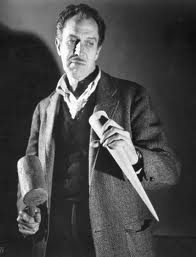
Ok, so you found the vampire’s lair, evaded traps, got away from minions and now stand in the center of the maze.  The vampire is asleep/dormant in his/her coffin, lying native soil, powerless – it’s time to stake him out.  Various lore suggests the best possible wood and these vary, but frankly anything that pierces the heart and remains there will work.  This is classic vampire staking at it’s finest.  So you hammer in the stake and maybe get some shrieking action and flailing as the body disintegrates.  So maybe it doesn’t turn into a foul wisp and you have a more corporeal vampire than you expected.  That probably means you have to cut off the head, move it to the feet and stuff garlic in its mouth.  A few crosses strewn about and some other holy items and you probably have it beat.

But I don’t understand why the intrepid vampire hunters just don’t finish the job on one of these corporeal jobs and just drag the staked stiff out into the sunlight for a bit of the old ultraviolet to do its job and fry that baby up!  Nah, by this time the credits are rolling and that vampire looks kind of heavy, so never mind.  Amateurs for sure; no doubt a movie sequel is going to be spawned due to this sloppy inaction.  Maybe I am being too logical after all.

The other possibility is to lure the vampire out into the sun either by keeping him up after bedtime or making an opening in a room to let in sunlight.  That scenario requires a lot of luck, timing and a really, really mad vampire who looses track of time.  In that case, give me a sleeping vampire every time.

So game on, my intrepid adventurers whether it be RPGs or LARPs and smite those blood suckers … do it logically, but just pay no attention to physical mass conversions during morphs and energy transfer and other things like physics.  Thinking too hard gets in the way of the fun and too much logic can rain on your parade.
                                                                            CoastConFan

    In this same series of blog entries, see also:
Also my previous post on a custom made Hourglass Vampire Hunting Kit  http://coastconfan.blogspot.com/2013/01/hourglass-vampire-hunting-kit.html
The truth about those Vampire Hunting Kits, appropriately named:  Vampire Hunting Kits Debunked, June 17, 2014

    Some additional links of interest on the subject::
Check out the extensive bibliography at the end of the Wikipedia article http://en.wikipedia.org/wiki/Vampire
Skeptics dictionary about vampires http://www.skepdic.com/vampires.html
An interesting show about vampirism http://en.wikipedia.org/wiki/Secrets_of_the_Dead

    Project Gutenberg free digital download of famous vampire stories:
download Varney the Vampire  http://www.gutenberg.org/ebooks/14833
download Carmilla  http://www.gutenberg.org/ebooks/10007 

    *movie quote, The Fearless Vampire Killers (1967)

You want fries with that stake?